

Every business owner running a digital marketing campaign eventually asks the same question: does social media actually help my search engine rankings? The relationship between social media SEO is one of the most debated topics in digital marketing, and the answer is more nuanced than a simple yes or no. While Google has stated that social signals are not a direct ranking factor, the indirect benefits of a strong social media presence on your organic search performance are undeniable and well-documented.
Whether you operate a small business in Dallas, Texas, or manage a growing brand in London, understanding how social media marketing intersects with search engine optimization can give you a competitive edge that most businesses overlook. If you need expert guidance combining social media and SEO strategy, Webdo Solutions helps businesses across the United States and United Kingdom build integrated digital marketing campaigns that drive real results.
In this comprehensive guide, we break down exactly how social media impacts SEO, which platforms matter most, and how to build a social strategy that supports your organic search goals.
Need a professional SEO strategy tailored to your business?
Get a free SEO audit from Webdo Solutionsand find out where you stand today.
What Is Social Media SEO?
Social media SEO refers to the practice of using social media platforms and activities to enhance a website’s search engine visibility and organic rankings. It involves creating shareable content, building brand authority, earning backlinks through social distribution, and increasing branded search volume — all of which send positive signals to search engines like Google about a website’s relevance and trustworthiness.
Why the Social Media and SEO Connection Matters in 2026
The digital landscape has changed dramatically. Search engines no longer operate in isolation from the rest of the internet. Google, Bing, and AI-powered search engines like ChatGPT and Perplexity all consider the broader online presence of a brand when determining its authority and relevance.
Here is why the social media and search rankings relationship matters more than ever:
Brand Signals Are Stronger Than Ever
Google’s algorithm has evolved to recognise brand signals as indicators of trust and authority. When people search for your brand name on Google after discovering you on social media, it tells Google your brand is legitimate and in demand. This branded search volume is one of the strongest indirect SEO benefits of social media marketing.
According to research from multiple SEO studies, brands with strong social presences tend to rank higher for competitive keywords. The correlation is not coincidence — it reflects genuine brand awareness SEO at work.
AI Search Engines Pull From Social Platforms
In 2026, generative AI search engines like ChatGPT, Gemini, and Perplexity do not rely solely on traditional web crawling. They pull information from multiple sources, including social media platforms, to build comprehensive answers. Having an active, authoritative social presence increases your chances of being cited in AI-generated responses.
This is where GEO (Generative Engine Optimization) becomes essential. Your social media content creates additional entity signals that AI engines use to understand and recommend your brand.
Content Distribution Drives Link Earning
One of the most powerful ways social media impacts SEO is through content distribution. When you share a blog post on LinkedIn, Twitter, or Facebook and it gets traction, other websites and bloggers discover your content and link to it. These earned backlinks are pure SEO gold.
At Webdo Solutions, we have seen this firsthand across our client campaigns. When we combined SEO services with strategic social distribution for our clients, the rate of organic backlink acquisition increased significantly within the first few months.
How Social Media Impacts SEO: 8 Key Mechanisms
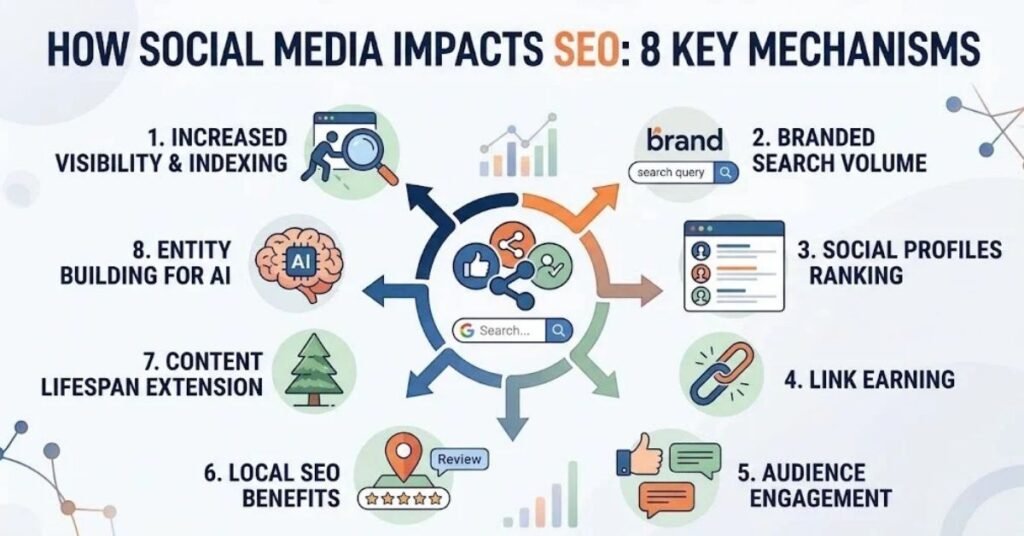
Let us break down the specific mechanisms through which social media activity influences your search engine performance.
1. Increased Content Visibility and Indexing Speed
When you publish new content and share it across social platforms, you are essentially creating more pathways for search engine crawlers to discover and index that content. Google has confirmed that social media links can help with content discovery, even if the links themselves do not pass traditional link equity.
For businesses in the United States and United Kingdom competing for attention in crowded markets, faster indexing means faster results. A blog post that gets shared widely on LinkedIn can be indexed within hours rather than days.
2. Branded Search Volume
Every time someone sees your brand on social media and later searches for it on Google, you are generating branded search queries. Google tracks this data and uses it as a signal of brand authority.
Consider this scenario: you run a home remodelling company in the Dallas-Fort Worth area and post a project showcase on Instagram. A homeowner sees it, is impressed, and searches “DFW Property Remodelers” on Google. That branded search tells Google your brand is relevant and sought after.
We saw this exact dynamic play out with DFW Property Remodelers, where a combined strategy contributed to an impressive +8,047% increase in search impressions. The brand recognition built through multiple channels amplified the SEO results.
3. Social Profiles Rank in Search Results
Your social media profiles themselves can rank on the first page of Google for your brand name and related keywords. This means a strong social media presence helps you dominate more real estate on the search results page.
When someone searches for your business, seeing your website, Google Business Profile, LinkedIn, Facebook, and Twitter accounts creates a wall of trust. It pushes competitors and third-party listings further down the page.
4. Link Earning Through Social Sharing
While social media links are typically nofollow (meaning they do not pass direct link equity), the content shared on social platforms can attract genuine dofollow backlinks from other websites. A well-crafted infographic shared on Pinterest, a thought-leadership post shared on LinkedIn, or a viral thread on Twitter can all lead to journalists, bloggers, and webmasters linking to your content.
This social sharing SEO impact is one of the most underappreciated benefits of maintaining an active social presence.
5. Audience Engagement Signals
Social media engagement — likes, shares, comments, and saves — indicates that your content resonates with real people. While Google does not use these metrics directly, the behavioural patterns they create (more site visits, longer time on page, lower bounce rates) are metrics Google does pay attention to.
When someone clicks through from a compelling social media post to your website and spends five minutes reading your content, that sends a positive user experience signal to search engines.
6. Local SEO Benefits
For businesses targeting local markets in the US or UK, social media can significantly boost local SEO efforts. Check-ins, location tags, local hashtags, and reviews on platforms like Facebook all contribute to local search visibility.
When XO Cabs UK combined local social media marketing with their SEO strategy, the results were remarkable: achieving the #1 position on Google Maps and a +340% increase in traffic. Social media played a supporting role in building the local brand presence that search engines rewarded.
7. Content Lifespan Extension
A blog post published on your website has a natural lifecycle in search results. Social media can extend that lifecycle dramatically. Resharing evergreen content, repurposing posts into different formats (carousels, videos, threads), and encouraging social bookmarking all keep your content generating traffic and signals long after publication.
8. Entity Building for AI Search
In the era of AEO (Answer Engine Optimization), building a strong entity presence across the web is crucial. Social media profiles contribute to your brand’s entity graph — the network of information search engines and AI systems use to understand who you are, what you do, and how authoritative you are.
Every consistent mention of your brand name, services, and expertise across social platforms strengthens your entity signals for both traditional and AI-powered search engines.
Which Social Media Platforms Help SEO the Most?
Not all social platforms contribute equally to SEO. Here is a breakdown of which platforms deliver the most SEO value and why:
LinkedIn is arguably the most powerful social platform for SEO, particularly for B2B businesses and professional services. Content shared on LinkedIn tends to attract high-quality engagement from industry professionals, journalists, and thought leaders who are likely to link to your content from their own websites.
LinkedIn articles are indexed by Google and can rank independently in search results. For businesses in both the US and UK markets, LinkedIn provides access to decision-makers who can amplify your content’s reach.
Twitter (X)
Despite its evolution, Twitter remains a valuable platform for SEO due to its real-time nature and the speed at which content can spread. Tweets are indexed by Google, and trending content on Twitter often appears in search results. For breaking news, thought leadership, and quick content distribution, Twitter delivers strong social signals.
YouTube
YouTube is the second-largest search engine in the world and is owned by Google. Videos published on YouTube can rank in both YouTube search and Google search results. For businesses creating educational content, tutorials, or case studies, YouTube provides a dual SEO benefit.
With nearly three billion monthly active users globally, Facebook offers massive reach. While organic reach has declined, Facebook Groups, local business pages, and shared content still drive significant referral traffic and brand awareness. For local businesses in the United States and United Kingdom, Facebook remains essential for community engagement and local SEO signals.
Often overlooked, Pinterest functions as a visual search engine. Pins are indexed by Google and can drive significant long-tail traffic. For ecommerce businesses, home services, and visual industries, Pinterest provides lasting SEO value that other platforms cannot match.
Building a Social Media Strategy That Supports SEO
Now that you understand the relationship between social media and SEO, here is how to build a strategy that leverages both channels effectively.
Step 1: Align Your Content Calendar
Your social media content calendar should support your SEO content strategy. When you publish a new blog post targeting a specific keyword, plan social media posts to distribute that content across relevant platforms.
A strong content marketing strategy integrates both channels from the planning stage, not as an afterthought.
Step 2: Optimise Social Profiles for Search
Ensure every social media profile includes:
- Your brand name (consistent across all platforms)
- A clear description of your services with relevant keywords
- A link to your website
- Consistent NAP (Name, Address, Phone) information for local businesses
- High-quality profile and cover images
Step 3: Create Shareable Content
Content that gets shared on social media typically has these characteristics:
- Original data or research — statistics, surveys, case studies
- Visual elements — infographics, charts, custom graphics
- Strong opinions — thought-leadership takes that spark discussion
- Practical value — how-to guides, checklists, templates
- Emotional resonance — stories that connect with your audience
Step 4: Encourage Social Sharing on Your Website
Make it easy for website visitors to share your content on social media:
- Add social sharing buttons to every blog post
- Include click-to-tweet quotes within your content
- Create social-specific images optimised for each platform
- Add Open Graph and Twitter Card markup to your pages
Step 5: Build Relationships, Not Just Followers
Genuine engagement on social media — responding to comments, participating in industry discussions, collaborating with complementary brands — creates the kind of authentic connections that lead to natural backlinks and brand mentions.
Step 6: Monitor and Measure Social-SEO Impact
Track the following metrics to understand how your social media efforts impact SEO:
- Referral traffic from social platforms (Google Analytics)
- Branded search volume trends (Google Search Console)
- Backlinks acquired from social distribution (Ahrefs, Semrush)
- Social profile rankings for brand keywords (manual search audits)
- Engagement rates and content amplification (native platform analytics)
Common Mistakes in Social Media SEO
Avoid these pitfalls that can undermine your social media and SEO integration:
Treating Social and SEO as Separate Channels
The biggest mistake is siloing your social media and SEO efforts. When these teams or strategies operate independently, you miss opportunities for content amplification, keyword alignment, and cross-channel optimisation.
Focusing Only on Follower Count
Vanity metrics like follower count do not translate to SEO value. A LinkedIn post that reaches 500 industry professionals and earns three backlinks is infinitely more valuable for SEO than a viral tweet that reaches 50,000 casual viewers.
Ignoring Platform-Specific Optimisation
Each social platform has its own search algorithm. Optimising your social content with relevant hashtags, keywords, and descriptions on each platform increases discoverability both within the platform and in Google search results.
Neglecting Consistency
Sporadic social media activity sends weak brand signals. Consistent posting, engagement, and brand messaging across platforms build the sustained presence that search engines and AI engines recognise as authoritative.
Not Repurposing Content
A single blog post can become ten social media posts: a LinkedIn article, an infographic for Pinterest, a Twitter thread, a Facebook discussion prompt, and a YouTube video summary. Not repurposing content is leaving SEO value on the table.
Case Study: Integrated Social and SEO Strategy in Action
At Webdo Solutions, we have witnessed the power of integrating social media with SEO across multiple client campaigns. When Lopez Law Group in Texas needed to build their online presence, we combined comprehensive SEO services with strategic content distribution across social channels.
The results spoke for themselves: +362% increase in organic traffic and 100+ first-page rankings on Google. The social media component played a crucial role in building the brand awareness and backlink profile that fuelled those SEO gains.
Similarly, our work with Dallas Parrots in the ecommerce space demonstrated how social media product showcases and community engagement supported an SEO strategy that grew impressions from 219K to 4.73M.
These results are not anomalies — they reflect what happens when social media and SEO work together as part of a cohesive digital marketing strategy.
Frequently Asked Questions
Does social media directly affect SEO?
Google has stated that social media signals (likes, shares, followers) are not direct ranking factors. However, social media indirectly impacts SEO through increased brand awareness, content distribution that earns backlinks, branded search volume, faster content indexing, and stronger entity signals for AI-powered search engines. The indirect benefits are substantial and well-documented across industries.
Which social platforms help SEO the most?
LinkedIn, YouTube, and Twitter provide the strongest SEO benefits. LinkedIn drives high-quality engagement and backlink opportunities from professionals. YouTube videos rank in both YouTube and Google search results. Twitter content gets indexed quickly and can trend in search results. Facebook and Pinterest offer additional value for local businesses and visual industries respectively.
How do social signals influence rankings?
Social signals influence rankings indirectly through several mechanisms. When content goes viral on social media, it attracts attention from bloggers and journalists who create genuine backlinks. Social sharing increases branded searches, which Google interprets as a brand authority signal. Active social profiles rank in search results, giving you more visibility. And social engagement drives quality traffic to your website, improving user experience metrics that search engines monitor.
How long does it take to see SEO benefits from social media?
Most businesses begin seeing measurable SEO benefits from social media within three to six months of implementing a consistent, integrated strategy. Branded search volume increases tend to appear first, followed by improved backlink acquisition rates. The full compounding effect of social media on SEO typically materialises over twelve months or more.
Should I invest in paid social media ads for SEO benefits?
Paid social media advertising does not directly improve SEO, but it can accelerate the indirect benefits. Boosting high-quality content increases its visibility, leading to more shares, more backlinks, and more branded searches. If you have a blog post or resource that has strong link-earning potential, promoting it through paid social can amplify the SEO return significantly.
Conclusion: Integrate Social Media Into Your SEO Strategy Today
The evidence is clear: social media and SEO are not separate disciplines — they are complementary forces that, when combined strategically, deliver results greater than either channel alone. From content distribution and backlink earning to brand building and AI search visibility, a strong social media presence directly supports your organic search performance.
If you are ready to build an integrated digital marketing strategy that combines the power of social media with proven SEO, AEO, and GEO techniques, Webdo Solutions can help. We have helped businesses across the United States and United Kingdom achieve measurable growth through holistic digital marketing strategies.
Explore our social media marketing services or view our portfolio of results to see what an integrated approach can deliver for your business.
SEO Case Studies & Search Console Metrics
Related Case Studies & Search Console Proof

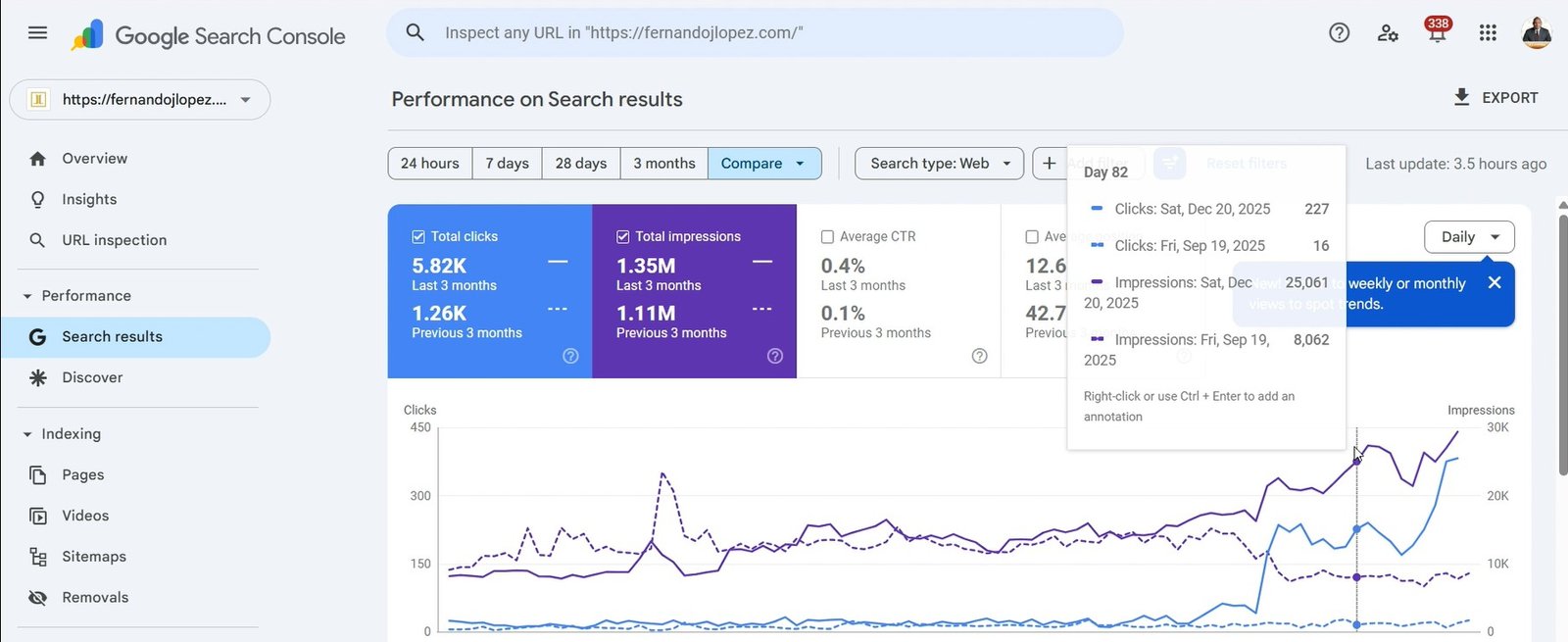
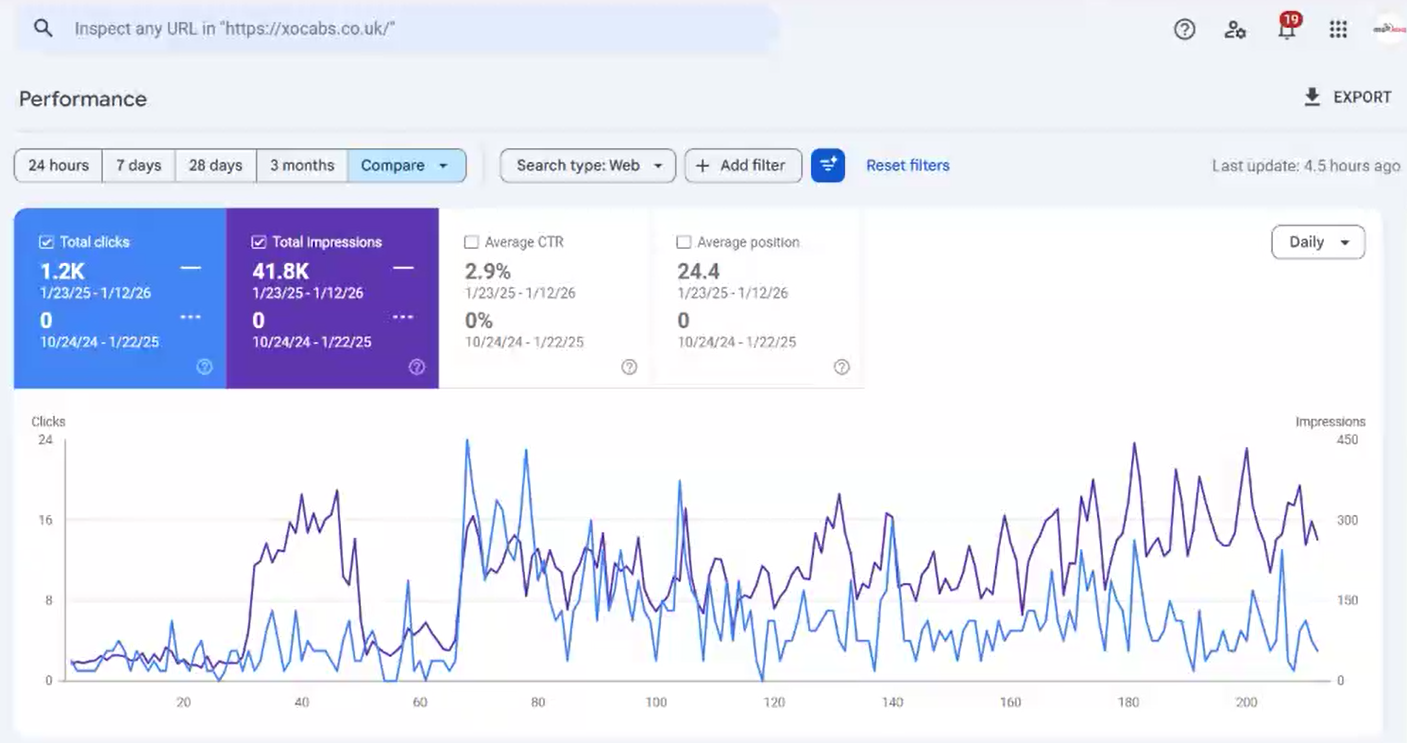
SEO Before and After Results, Side by Side
| Client | Market | Metric | Before | After |
|---|---|---|---|---|
| Dallas Parrots | USA | Impressions | 219K | 4.73M |
| Dallas Parrots | USA | Average position | 18.4 | 6.8 |
| DFW Property Remodelers | USA | Clicks | Baseline | +2,150% |
| DFW Property Remodelers | USA | Impressions | Baseline | +8,047% |
| Lopez Law Group | USA | Clicks | Baseline | +362% |
| XO Cabs | UK | Traffic | Baseline | +340% |
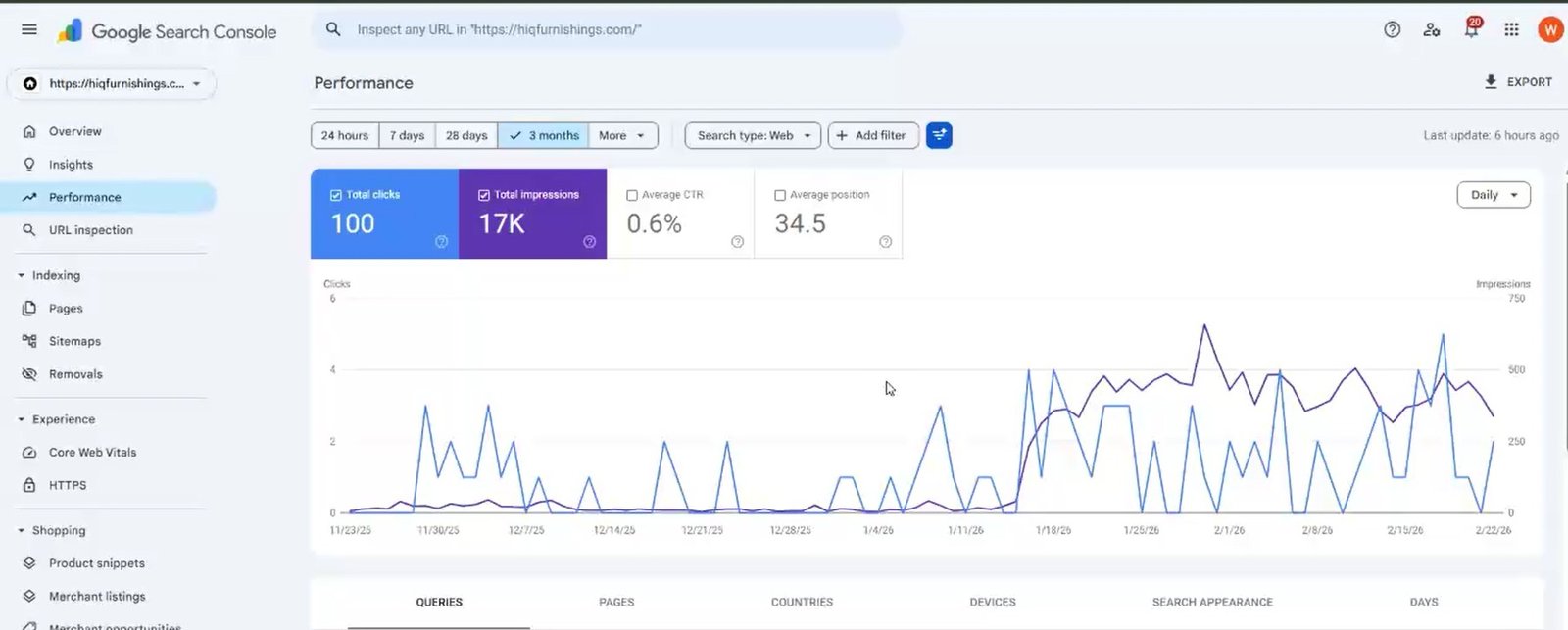
| Hiq Furnishings | UK | Impressions, first 90 days | 0 | 17K |
| FintechZoom Official | USA | Impressions, first 60 days | 0 | 88K |
| Weight Lift Calculator | USA | Clicks | Baseline | +3,104% |
Ready to get started? Contact Webdo Solutions for a free digital marketing audit today.
About the Author: Ozair Sharif is the Founder and CEO of Webdo Solutions, a full-service digital marketing agency specializing in SEO, AEO, GEO, and website development for businesses across the United States and United Kingdom.