


AI content SEO is one of the most debated topics in digital marketing in 2026. Every business owner in the United States and United Kingdom is asking the same question: can I use AI writing tools like ChatGPT, Gemini, or Claude to create content that ranks on Google? The answer is yes — but only if you do it correctly. The difference between AI content that ranks and AI content that gets buried lies in how you edit, enhance, and humanize it.
Google has been clear about its position. The search engine does not penalise content simply because it was generated by AI. What Google penalises is low-quality, unhelpful content — regardless of whether a human or a machine wrote it. This distinction matters enormously for your SEO strategy.
At Webdo Solutions, we help businesses across the US and UK integrate AI writing tools into their content workflows without sacrificing quality, authenticity, or search rankings. Here is exactly how to do it.
Need a professional SEO strategy tailored to your business?
Get a free SEO audit from Webdo Solutionsand find out where you stand today.
What Is AI Content SEO?
AI content SEO refers to the practice of using artificial intelligence writing tools to assist in creating website content — blog posts, landing pages, product descriptions, and other text — while ensuring that content meets search engine quality standards and ranks competitively. It involves AI-assisted drafting combined with human editing, fact-checking, and optimization to produce content that satisfies both Google’s algorithms and real human readers.
Google’s Official Position on AI-Generated Content
Understanding Google’s stance on AI content is critical before you publish a single AI-assisted word on your website. Google has made several official statements that clarify its position.
Quality Over Origin
Google’s Search Liaison has stated repeatedly that the search engine evaluates content based on quality, not production method. The helpful content system looks at whether content provides genuine value to users, demonstrates expertise and experience, and satisfies search intent. A well-edited AI-assisted article that provides unique insights, accurate information, and genuine value can rank just as well as a purely human-written piece.
The E-E-A-T Framework Still Applies
Experience, Expertise, Authoritativeness, and Trustworthiness — Google’s E-E-A-T framework — applies equally to AI-generated content. This means AI content needs to demonstrate real-world experience, be written or reviewed by someone with genuine expertise, come from an authoritative source, and be trustworthy and accurate.
Pure AI output, without human expert review, rarely meets these standards. AI tools can hallucinate facts, produce generic advice, and lack the personal experience signals that Google values. This is why the editing and enhancement step is non-negotiable.
Spam Policies Target Scaled Content Abuse
Google’s spam policies specifically target “scaled content abuse” — the practice of generating large volumes of low-quality content primarily to manipulate search rankings. This includes mass-producing AI articles with minimal human oversight, creating hundreds of pages with slightly varied keywords but essentially the same content, and using AI to generate content on topics where the publisher has no expertise.
If your AI content strategy looks like a content farm, Google will treat it like one. The key is using AI as a tool to assist skilled human writers, not as a replacement for them.
Why Raw AI Content Fails at SEO
Before diving into the solutions, it is important to understand why publishing unedited AI content almost always produces poor SEO results.
Generic and Repetitive Output
AI models generate content based on patterns in their training data. This means AI-written content tends to cover the same points in the same order that thousands of other articles cover. Google’s helpful content system specifically devalues content that does not add anything new to the conversation. If your AI-generated article reads like every other article on page one, it will not outrank them.
Lack of Original Data and Experience
The content that ranks highest on Google typically includes original research, proprietary data, unique case studies, or personal experience. AI cannot generate these elements. It can only rephrase and recombine information that already exists.
When we helped Dallas Parrots grow from 219,000 to 4.73 million impressions, one of the key content strategies was incorporating real performance data and specific tactical details that no AI tool could generate. Original data creates competitive moats that pure AI content cannot cross.
Factual Inaccuracies
AI tools hallucinate — they present fabricated information as fact. In fields like legal services, healthcare, finance, and technical subjects, factual errors can damage your credibility and potentially expose your business to liability. For the US and UK markets, where regulatory environments differ, AI tools often mix up jurisdiction-specific rules and regulations.
Missing Internal Linking Strategy
AI tools do not understand your website structure. They cannot strategically place internal links to your service pages, portfolio pages, or related blog content. Effective internal linking is critical for SEO, and it requires human knowledge of your site architecture.
Verified Search Console Stats & Performance Proof

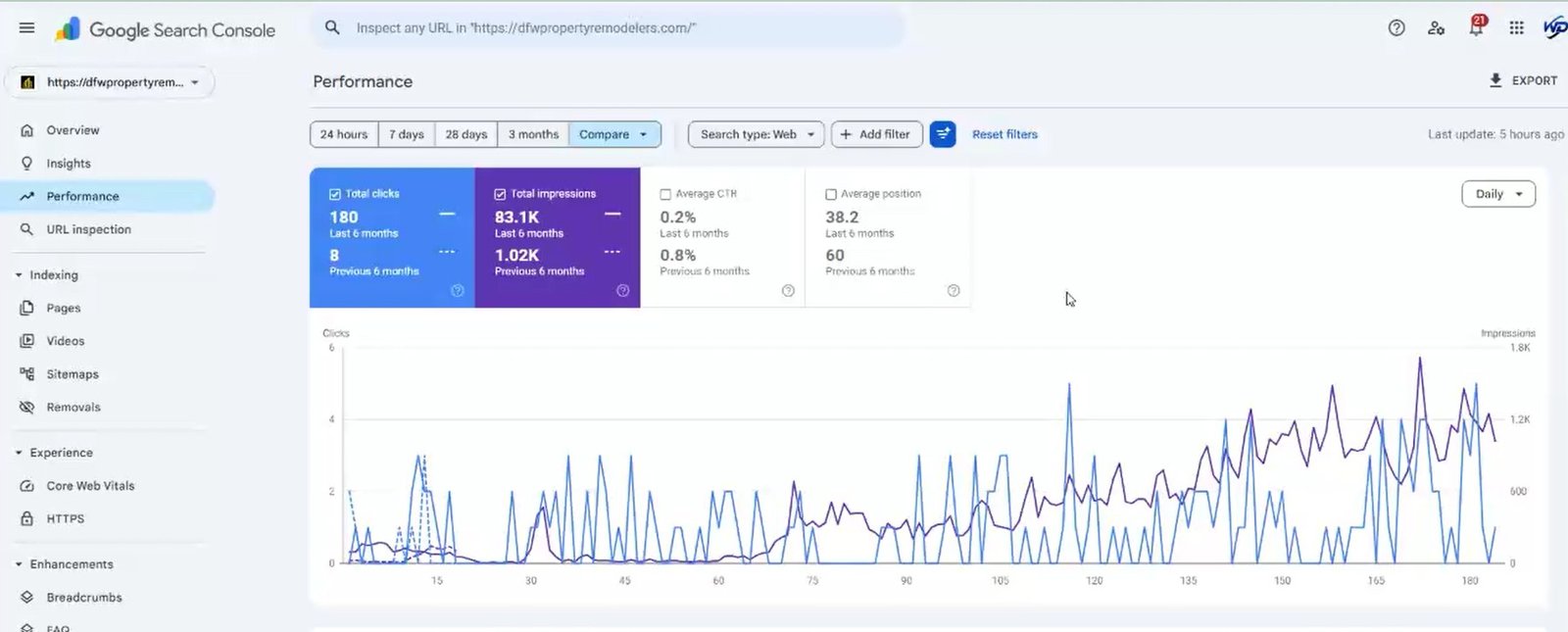
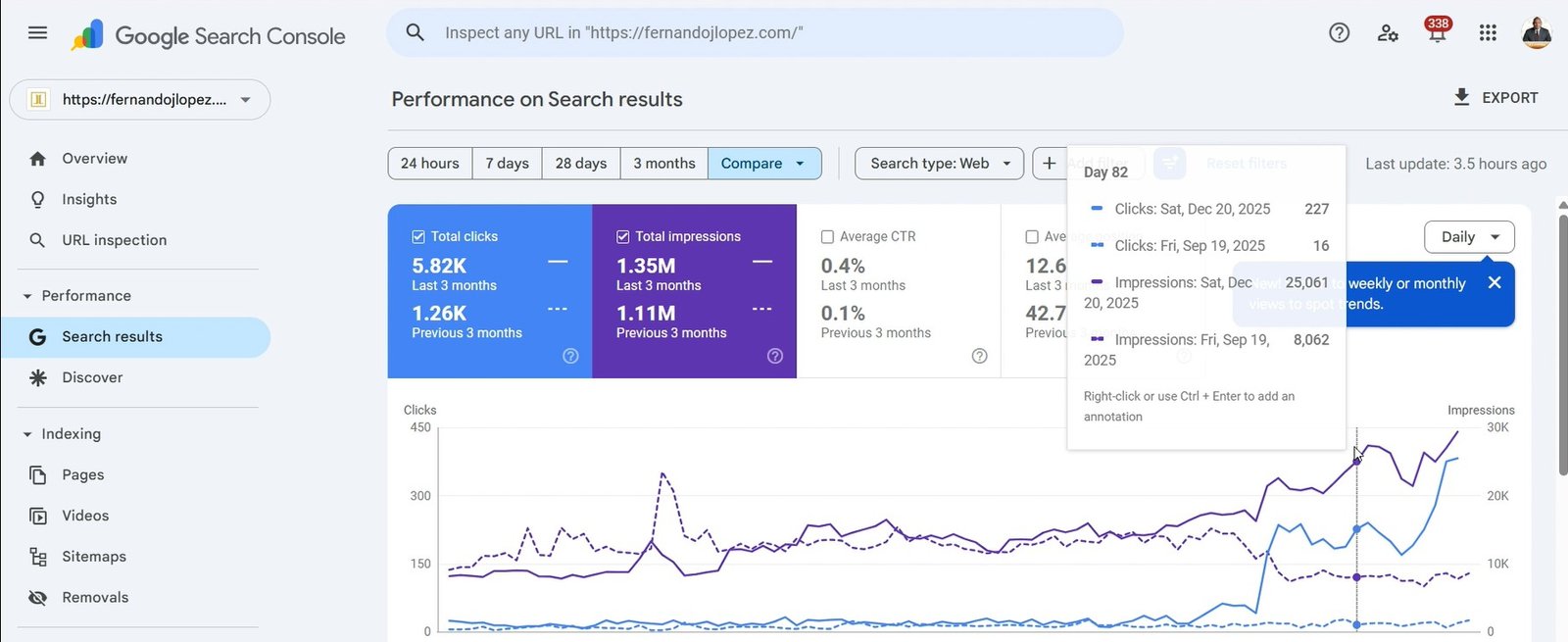
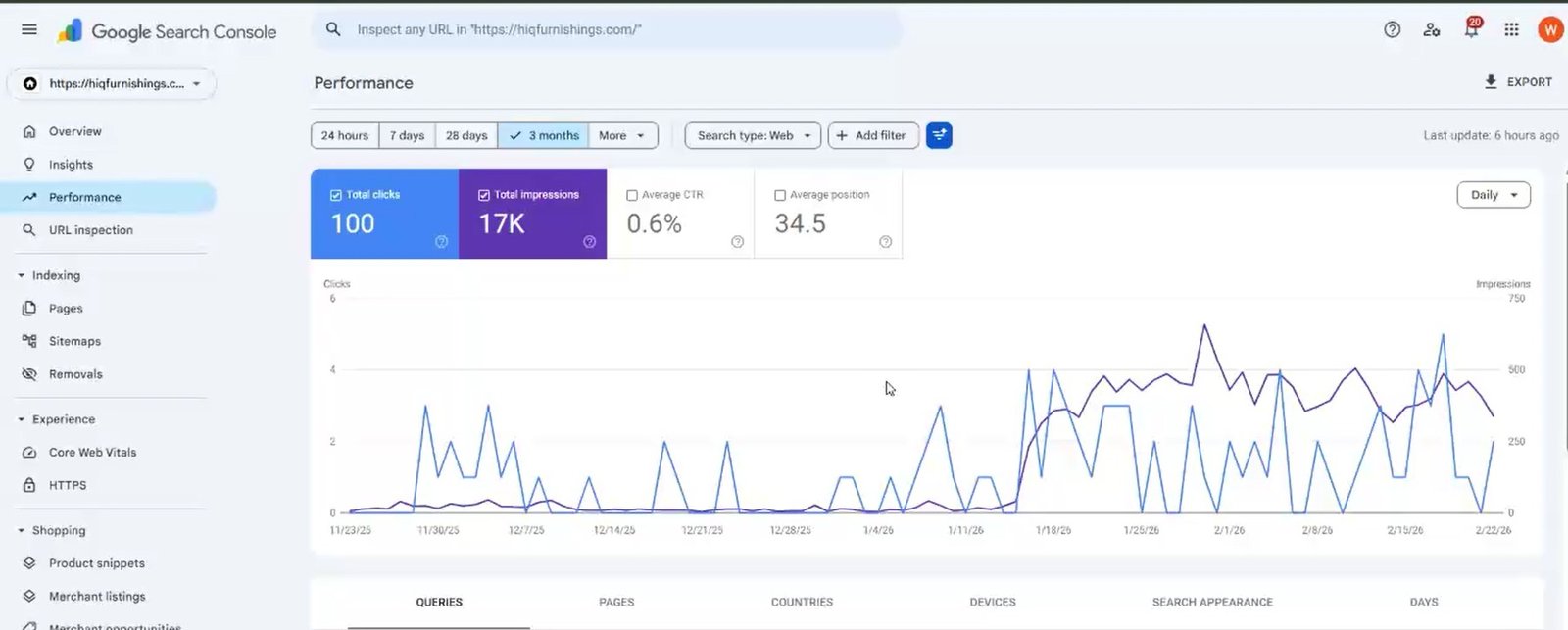
| Client | Market | Metric | Before | After |
|---|---|---|---|---|
| Dallas Parrots | USA | Impressions | 219K | 4.73M |
| Dallas Parrots | USA | Average position | 18.4 | 6.8 |
| DFW Property Remodelers | USA | Clicks | Baseline | +2,150% |
| Lopez Law Group | USA | Clicks | Baseline | +362% |
| XO Cabs | UK | Traffic | Baseline | +340% |
| Hiq Furnishings | UK | Impressions (90 days) | 0 | 17K |
| FintechZoom Official | USA | Impressions (60 days) | 0 | 88K |
| Weight Lift Calculator | USA | Clicks | Baseline | +3,104% |
No Brand Voice or Personality
AI content tends to sound the same regardless of who publishes it. Your brand voice, tone, personality, and unique perspective are what differentiate your content from competitors. Without a strong editorial pass, AI content strips away the distinctiveness that makes readers trust and engage with your brand.
The Right Way to Use AI for SEO Content
Here is a step-by-step framework for integrating AI tools into your content creation workflow without compromising quality or rankings.
Step 1: Use AI for Research and Outlining, Not Final Drafts
The most effective use of AI in content creation is the research and planning phase. Use AI tools to brainstorm topic angles and subtopics you might not have considered, generate content outlines with logical heading structures, identify questions your target audience is asking, summarize competitor content to find gaps you can fill, and draft initial section outlines that you will rewrite entirely.
This approach treats AI as a research assistant rather than a ghostwriter. You get the efficiency benefit of AI without publishing generic output.
Step 2: Draft With AI, Then Rewrite Substantially
If you use AI to generate draft text, plan to rewrite 60 to 80 percent of it. A useful framework for this rewriting process involves several stages.
Add personal experience. Replace generic AI advice with specific examples from your business. If you are writing about contractor SEO, include real scenarios you have encountered, specific results you have achieved, and tactical details that only someone with hands-on experience would know.
Insert proprietary data. Replace vague claims like “businesses see significant improvement” with specific metrics like “our client DFW Property Remodelers saw an 8,047 percent increase in impressions after implementing our technical SEO recommendations.”
Rewrite for your brand voice. AI tends to write in a formal, academic tone. Rewrite sections to match your brand’s voice — whether that is authoritative, conversational, technical, or approachable.
Add nuance and caveats. AI presents information in absolute terms. Real expertise includes knowing when something works, when it does not, what the exceptions are, and what the trade-offs look like. Add this nuance throughout.
Step 3: Fact-Check Everything
Every factual claim in AI-generated content must be verified independently. This includes statistics and data points (AI frequently fabricates statistics), named individuals and their credentials, company names and their achievements, technical specifications and requirements, legal and regulatory information (especially across US and UK jurisdictions), and dates and timelines.
For businesses serving both the US and UK markets, pay special attention to jurisdiction-specific information. AI tools often present US-centric information without noting that rules differ in the UK, or vice versa.
Step 4: Optimize for On-Page SEO
AI tools do not optimize content for SEO effectively on their own. You need to manually ensure proper keyword placement and density, heading hierarchy using H2 and H3 tags with semantic keywords, meta title and meta description optimization, image optimization with descriptive alt text, proper schema markup implementation, and internal linking to relevant service and portfolio pages.
This on-page optimization layer transforms AI-assisted content into content that actually ranks. At Webdo Solutions, our content process always includes a dedicated SEO optimization pass after the writing and editing phases.
Step 5: Add AEO and GEO Elements
In 2026, optimizing for Google alone is not enough. Your content also needs to be structured for AI search engines like ChatGPT, Gemini, and Perplexity.
AEO elements include a clear definition block answering “What is [topic]?” in 40 to 60 words, FAQ sections with direct answers formatted as H3 questions followed by concise responses, and structured data using FAQPage JSON-LD schema.
GEO elements include clear entity signals such as brand mentions and author credentials, factual claims supported by specific numbers and sources, comparison tables that AI can easily extract and cite, and comprehensive topic coverage that establishes topical authority.
These elements help your content appear in both traditional search results and AI-generated answers, maximizing your visibility across all search platforms.
Step 6: Implement Human Review and Quality Control
Before publishing any AI-assisted content, it should go through a quality control process involving an expert review where someone with genuine subject matter expertise reviews the content for accuracy, a style review to ensure the content matches your brand voice and editorial standards, an SEO review to confirm all on-page optimization elements are in place, and a legal and compliance review for regulated industries to ensure claims are accurate and compliant.
AI Content Workflows That Scale

For businesses that need to produce content at scale, here are proven workflows that maintain quality while leveraging AI efficiency.
The Expert-Led AI Workflow
In this model, the subject matter expert creates a detailed brief with key points, personal insights, and data. AI generates a draft based on the brief. The expert rewrites and enhances the draft, adding experience and nuance. An editor polishes the final piece for readability and brand voice. An SEO specialist optimizes headings, links, and metadata.
This workflow can reduce content production time by 40 to 50 percent while maintaining expert-level quality.
The AI-Assisted Research Workflow
Here, AI tools research and compile information from multiple sources. A human writer uses this research to craft original content from scratch. The writer adds unique insights, case studies, and original analysis. The piece goes through standard editorial and SEO review.
This approach uses AI purely for research acceleration and produces content that is almost entirely human-written.
The Template-Based AI Workflow
This works well for businesses that need many similar but unique pages — such as location pages, product descriptions, or service variations. A human creates a detailed content template with specific sections, tone guidelines, and required elements. AI generates first drafts based on the template. Humans customize each draft with unique details, local information, and specific data. Quality control ensures every page offers genuine unique value.
What Google’s AI Content Detection Can and Cannot Do
A common concern is whether Google can detect AI-generated content and penalise it specifically. Here is the reality.
Google has not confirmed using AI detection tools as a ranking signal. Publicly available AI detectors are unreliable, with high false positive rates. Google’s systems evaluate content quality, not content origin. The helpful content system measures value to users, not writing methodology.
This means focusing on making your content genuinely useful is more productive than trying to evade AI detection. If your AI-assisted content provides unique value, accurate information, and a great user experience, how it was produced is irrelevant.
Industries Where AI Content Requires Extra Caution
Certain industries demand higher standards for AI-assisted content due to the potential impact of inaccuracies.
Legal services. AI frequently generates inaccurate legal information. Content about law firm SEO and legal topics must be reviewed by qualified legal professionals. US and UK legal systems differ substantially, and AI tools regularly confuse jurisdiction-specific rules.
Healthcare. Medical content falls under Google’s YMYL (Your Money or Your Life) category and requires expert review. Inaccurate health information can cause real harm.
Financial services. Tax laws, investment regulations, and financial advice differ between the US and UK. AI tools regularly present US tax information as universal truth.
Ecommerce product content. Product specifications, safety information, and regulatory compliance details must be verified against manufacturer sources. AI tools may generate plausible but incorrect specifications. Our work with Dallas Parrots highlighted the importance of accurate product information in ecommerce SEO.
Measuring the Success of AI-Assisted Content
Track these metrics to evaluate whether your AI content workflow is producing SEO results.
Organic traffic growth. Are AI-assisted pages driving increasing organic traffic over time? Compare with purely human-written pages to benchmark performance.
Keyword rankings. Are AI-assisted pages ranking for their target keywords? Track position changes over the first three to six months after publication.
Engagement metrics. Monitor bounce rate, time on page, and pages per session. AI content that fails to engage users will show poor engagement metrics.
Conversion rate. Ultimately, content exists to drive business results. Track leads, enquiries, and sales generated from AI-assisted content.
Search Console performance. Use Google Search Console to monitor impressions, clicks, and click-through rates for AI-assisted content pages.
How Webdo Solutions Uses AI Responsibly
At Webdo Solutions, we integrate AI tools into our content production workflow as research and drafting assistants — never as a replacement for human expertise. Every piece of content we publish goes through expert review by someone with genuine experience in the subject matter, fact-checking against authoritative sources, on-page SEO optimization by our team, brand voice alignment for each client, and AEO and GEO optimization for AI search visibility.
This approach has delivered measurable results for our clients. Lopez Law Group saw over 362 percent traffic growth and achieved 100 plus number one rankings — results that demand authoritative, expert-level content that no AI tool could produce on its own.
Frequently Asked Questions
Does Google penalise AI-generated content?
Google does not penalise content based solely on whether AI was involved in its creation. What Google penalises is low-quality, unhelpful, or spammy content — regardless of how it was produced. Scaled content abuse, where businesses mass-produce low-quality AI articles to manipulate rankings, is explicitly against Google’s spam policies. However, well-edited, expert-reviewed AI-assisted content that provides genuine value to users is treated the same as human-written content.
How should I edit AI-written content?
Plan to rewrite 60 to 80 percent of AI-generated draft text. Add personal experience and unique insights, insert proprietary data and specific metrics, rewrite for your brand voice, fact-check every claim independently, add nuance and caveats that demonstrate genuine expertise, and optimize for on-page SEO including headings, internal links, and metadata. The goal is content that could only come from your business, with AI having accelerated the initial drafting process.
Can AI content rank well on Google?
Yes, AI-assisted content can rank well when properly edited and enhanced. The key factors are adding genuine expertise and original insights, ensuring factual accuracy, optimizing for on-page SEO, including proper internal linking, meeting E-E-A-T standards through expert review, and providing unique value that distinguishes it from competitor content. Raw, unedited AI output rarely ranks well because it lacks originality, may contain inaccuracies, and typically covers the same ground as every other article on the topic.
What is the biggest risk of using AI for SEO content?
The biggest risk is publishing AI content at scale without adequate human review, which constitutes scaled content abuse under Google’s spam policies. This can result in a site-wide manual action or algorithmic demotion that affects all of your pages, not just the AI-generated ones. The second biggest risk is factual inaccuracy, especially for YMYL topics where incorrect information can damage your credibility and potentially expose your business to liability.
Should I disclose that content was written with AI assistance?
Google does not require disclosure of AI involvement in content creation. There is no ranking benefit or penalty associated with disclosure. However, transparency can build trust with your audience, especially in industries where credibility matters. Many businesses choose to disclose AI assistance while emphasizing the human expertise and review process that ensures quality.
Conclusion
AI writing tools are powerful allies for SEO content production in 2026 — but only when used correctly. The businesses winning with AI content are not those publishing raw AI output at scale. They are the ones using AI to accelerate research and drafting while investing heavily in human expertise, editing, and optimization.
The formula is straightforward: AI efficiency plus human expertise equals content that ranks. Skip the human expertise, and you are building on a foundation of generic, unverified content that Google’s systems are increasingly effective at identifying and deprioritizing.
Ready to build an AI-powered content strategy that drives real SEO results? Contact Webdo Solutions for a free consultation. We will help you integrate AI tools into your content workflow without sacrificing the quality, accuracy, and authenticity that Google and your audience demand. Get your free content audit →
About the Author: Ozair Sharif is the Founder and CEO of Webdo Solutions, a full-service digital marketing agency specializing in SEO, AEO, GEO, and website development for businesses across the United States and United Kingdom.