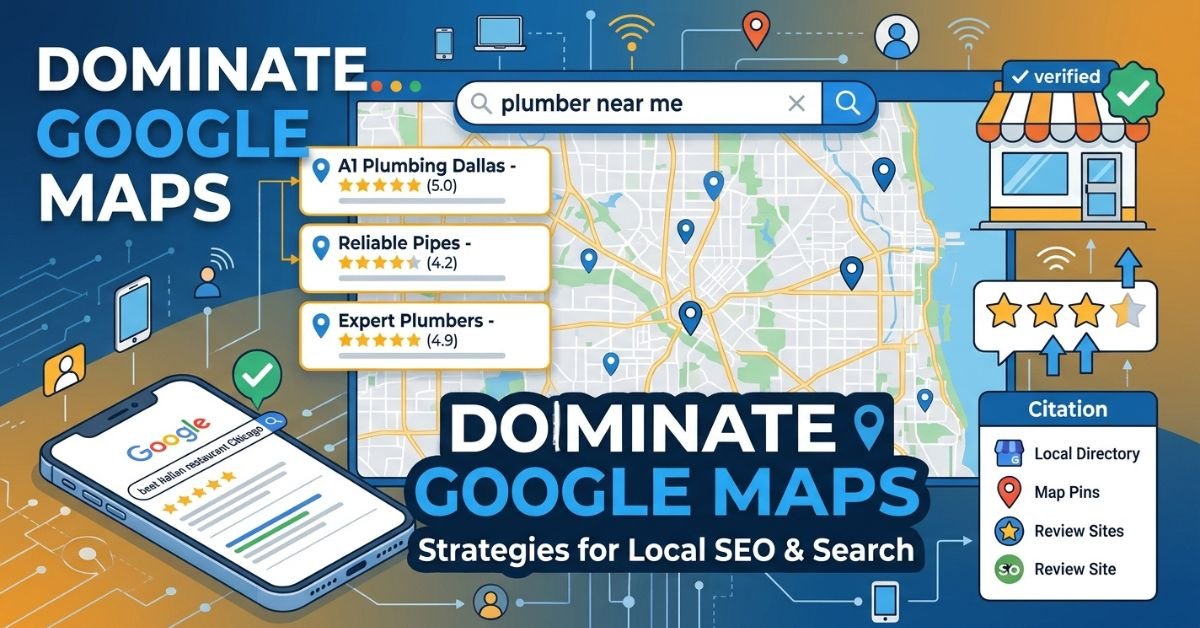
If your business serves customers in a specific city, region, or neighbourhood, local SEO is the single most important investment you can make in your digital marketing strategy. Whether you operate a law firm in Dallas, a plumbing company in Manchester, or a restaurant in Chicago, ranking at the top of Google Maps and local search results puts your business directly in front of people who are ready to buy.
Consider this: 46% of all Google searches have local intent, and 76% of people who search for something nearby on their smartphone visit a related business within 24 hours. Those are not casual browsers — those are customers actively looking for what you offer. At Webdo Solutions, we have helped businesses across the United States and United Kingdom turn local search visibility into consistent, high-quality leads. Need help with your local search strategy? Get a free audit today.
Need a professional SEO strategy tailored to your business?
Get a free SEO audit from Webdo Solutionsand find out where you stand today.
What Is Local SEO?
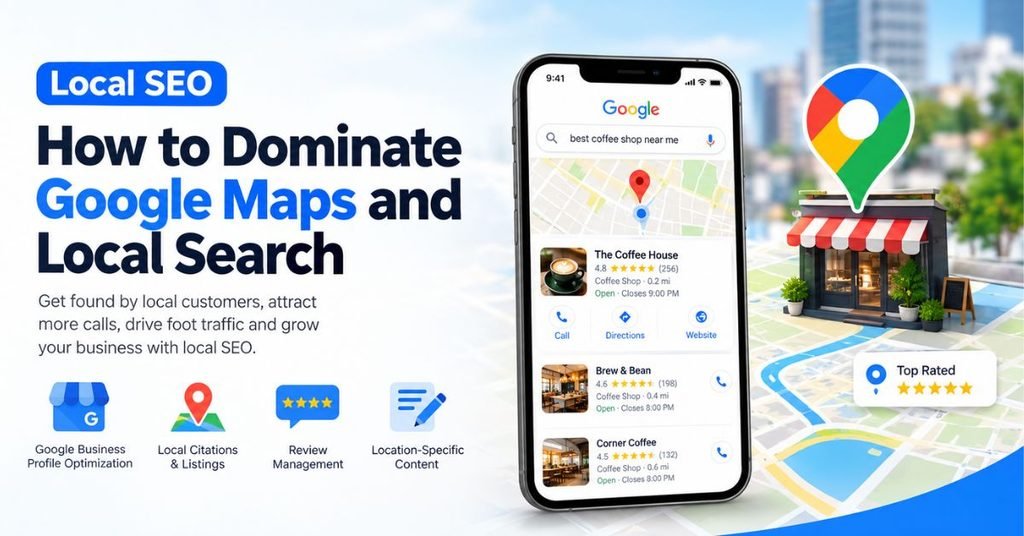
Local SEO is a search engine optimization strategy focused on improving a business’s visibility in geographically relevant search results. It encompasses Google Business Profile optimization, local citation building, review management, and location-specific content creation. Businesses use local SEO to appear in the Google Maps “Local Pack,” local finder results, and organic search results for queries with local intent.
Why Local SEO Matters More Than Ever in 2026
The way people search for local businesses has fundamentally changed. Voice assistants, AI-powered search engines, and mobile-first behaviour have reshaped the landscape. Here is why local SEO should be at the top of your priority list.
The Rise of “Near Me” Searches
“Near me” searches have grown by over 500% in the past five years. When someone types “plumber near me” or “best Italian restaurant near me,” Google uses their device location to serve hyper-relevant results. If your business is not optimized for local search, you are invisible to these high-intent searchers.
In the United States, mobile local searches leading to a store visit within a day are especially common in industries like home services, healthcare, legal, and hospitality. In the United Kingdom, the pattern mirrors closely, with cities like London, Birmingham, and Manchester seeing enormous volumes of local search activity.
The Google Local Pack Drives Clicks
The Google Local Pack — those three business listings that appear at the top of search results with a map — captures approximately 44% of clicks on the first page. Ranking in the Local Pack is not optional if you want local customers. It is essential.
Zero-Click Searches Favour Local Results
More than 65% of Google searches now end without a click to a website. Users get the information they need directly from the search results page — the business name, phone number, hours, directions, and reviews. Local SEO ensures your business information is accurate, complete, and visible in these zero-click scenarios.
How Google Ranks Local Search Results
Understanding Google’s local ranking factors is the foundation of any successful local SEO strategy. Google uses three primary factors for local search rankings.
Relevance
Relevance measures how well your business listing matches what the searcher is looking for. This is determined by your business category, services listed, keywords in your business description, and the content on your website.
To improve relevance: – Choose the most accurate primary category in your Google Business Profile – Add all applicable secondary categories – Write a detailed business description with natural keyword usage – Ensure your website content aligns with the services you list in your profile
Distance
Distance is how far your business is from the searcher or the location specified in their query. You cannot change your physical location, but you can optimize for multiple service areas and create location-specific landing pages for each area you serve.
Prominence
Prominence reflects how well-known and trusted your business is. Google measures prominence through online reviews, citation volume, backlink quality, social signals, and overall web presence. A business with 200 five-star reviews and citations across 50 directories will outrank a competitor with 10 reviews and minimal online presence.
Google Business Profile Optimization: Your Local SEO Foundation
Your Google Business Profile (formerly Google My Business) is the single most important element of your local SEO strategy. Here is how to optimize it for maximum visibility.
Claim and Verify Your Profile
If you have not claimed your Google Business Profile, do it immediately. Verification typically requires receiving a postcard at your business address, though phone and email verification are sometimes available. Without verification, you cannot manage your listing or respond to reviews.
Complete Every Section
Google rewards complete profiles with higher visibility. Fill out every available field:
- Business name — Use your exact legal business name. Do not stuff keywords into it
- Address — Enter your precise street address. For service-area businesses, specify the areas you serve
- Phone number — Use a local phone number, not a toll-free number, for stronger local signals
- Website URL — Link to your homepage or a relevant landing page
- Business hours — Keep these accurate, including holiday hours
- Business description — Write a compelling 750-character description using your primary keywords naturally
- Services/Products — List every service you offer with detailed descriptions
- Attributes — Add all relevant attributes (wheelchair accessible, free Wi-Fi, etc.)
Choose the Right Categories
Your primary category has the most significant impact on which searches your business appears for. Research competitor categories using tools like Pleper or BrightLocal. Most businesses should select 3-5 relevant categories.
For example, a digital marketing agency like Webdo Solutions might use: – Primary: Internet Marketing Service – Secondary: SEO Agency, Web Design Agency, Marketing Agency
Post Regularly
Google Business Profile posts keep your listing fresh and signal activity to Google. Post weekly updates, offers, events, and news. Include relevant keywords and calls-to-action in every post.
Add Photos and Videos
Businesses with photos receive 42% more requests for directions and 35% more click-throughs to their websites. Upload high-quality photos of your storefront, interior, team, products, and completed projects. Add new photos monthly to keep your profile dynamic.
NAP Consistency: The Foundation of Local Citations
NAP stands for Name, Address, and Phone Number. Consistency in how your NAP information appears across the internet is critical for local SEO.
Why NAP Consistency Matters
Google cross-references your business information across hundreds of directories, social platforms, and data aggregators. Inconsistencies — even minor ones like “Street” versus “St.” or a different phone number — create confusion and reduce Google’s confidence in your listing. This leads to lower rankings.
How to Audit Your NAP
- Search for your business name across major directories (Yelp, Yellow Pages, BBB, Yell.com for UK businesses)
- Document every variation of your NAP information
- Create a master NAP format and standardize everywhere
- Use tools like Moz Local, BrightLocal, or Whitespark to automate the audit
Fix Inconsistencies Systematically
Start with the most authoritative sources: – Google Business Profile – Apple Maps / Apple Business Connect – Bing Places for Business – Facebook Business Page – Yelp (in the US) / Yell (in the UK) – Industry-specific directories
Then move through the broader web, updating every listing to match your master NAP exactly.
Building Local Citations for Authority
Local citations are online mentions of your business name, address, and phone number on other websites. They are a significant ranking factor for local SEO.
Types of Citations
Structured citations appear in business directories with a standardized format — Yelp, Yellow Pages, TripAdvisor, Thomson Local (UK), and industry-specific directories.
Unstructured citations are mentions of your business in blog posts, news articles, event listings, and other web content that does not follow a directory format.
Where to Build Citations
For US businesses: – Google Business Profile, Yelp, BBB, Yellow Pages, Angi, Manta, MapQuest, Apple Maps, Bing Places, Facebook, LinkedIn, ChamberOfCommerce.com, and industry-specific directories
For UK businesses: – Google Business Profile, Yell, Thomson Local, FreeIndex, Scoot, 192.com, Bing Places, Apple Maps, Facebook, LinkedIn, Cylex UK, Hotfrog, and industry-specific directories
How Many Citations Do You Need?
Quality matters more than quantity. A business in a moderately competitive market typically needs 40-80 high-quality citations to compete effectively. In highly competitive markets like legal services in major cities, you may need 100+.
At Webdo Solutions, we helped XO Cabs UK achieve the #1 position on Google Maps with +340% traffic growth, partly through strategic local citation building targeted at the UK transport sector.
Online Reviews: Your Most Powerful Local Ranking Signal
Online reviews influence both your local search rankings and your conversion rates. A study by BrightLocal found that 87% of consumers read online reviews for local businesses, and 79% trust online reviews as much as personal recommendations.
How Reviews Affect Rankings
Google’s algorithm considers: – Review quantity — More reviews signal popularity and trustworthiness – Review quality — Higher average ratings improve rankings – Review velocity — Consistent new reviews show ongoing activity – Review diversity — Reviews across multiple platforms strengthen signals – Review responses — Businesses that respond to reviews rank higher
Strategies for Getting More Reviews
- Ask at the right moment — Request reviews immediately after a positive customer interaction
- Make it easy — Send a direct link to your Google review page via email or text
- Use follow-up sequences — Automate post-service emails requesting reviews
- Train your staff — Empower team members to ask satisfied customers for reviews
- Respond to every review — Thank positive reviewers and address negative feedback professionally
Handling Negative Reviews
Negative reviews are inevitable and, when handled correctly, actually build trust. Respond within 24 hours, acknowledge the concern, take responsibility where appropriate, and offer to resolve the issue offline. Never argue publicly with a reviewer.
Local Content Strategy: Dominating Location-Specific Searches
Creating content targeted at your specific service areas helps you rank for a wider range of local searches and establishes topical authority.
Location-Specific Landing Pages
If you serve multiple cities or regions, create dedicated landing pages for each location. Each page should include:
- Unique, substantive content (not duplicate content with just the city name swapped)
- Location-specific testimonials and case studies
- Local landmarks, neighbourhoods, and references
- An embedded Google Map of your service area
- Location-specific schema markup
For example, a law firm in Texas might create pages for “Personal Injury Lawyer Dallas,” “Personal Injury Lawyer Houston,” and “Personal Injury Lawyer Austin,” each with unique content tailored to that market.
Locally-Focused Blog Content
Write blog posts that address local topics, events, and concerns. Examples: – “Top 10 Home Renovation Trends in [City] for 2026” – “How [Local Event] Is Affecting Small Businesses in [City]” – “A Local Business Owner’s Guide to [City] Regulations”
This type of content earns local backlinks, social shares, and positions your business as a community authority.
Local Link Building
Earn backlinks from local sources: – Local chambers of commerce – Community organizations and charities – Local news outlets and blogs – Business associations – Event sponsorships – Local university or school partnerships
Technical Local SEO: What Happens Behind the Scenes
Beyond profile optimization and content, technical elements on your website significantly impact local search performance.
Local Schema Markup
Add LocalBusiness schema markup to your website. This structured data helps Google understand your business type, location, hours, and contact information. Use the most specific schema type available — for example, use “LegalService” for a law firm rather than generic “LocalBusiness.”
Mobile Optimization
Over 60% of local searches happen on mobile devices. Your website must load quickly, display correctly on all screen sizes, and have click-to-call functionality. Google’s mobile-first indexing means your mobile experience directly impacts your rankings.
At Webdo Solutions, we build mobile-optimized websites from the ground up, ensuring fast load times and seamless user experiences across devices.
Page Speed
Local searchers are impatient. If your site takes more than 3 seconds to load, 53% of mobile visitors will leave. Optimize images, leverage browser caching, minimize JavaScript, and use a content delivery network (CDN) to improve speed.
HTTPS Security
An SSL certificate is non-negotiable. Google confirmed HTTPS as a ranking signal, and browsers display “Not Secure” warnings for non-HTTPS sites. For local businesses handling customer enquiries or appointment bookings, this warning destroys trust instantly.
Local SEO for Multi-Location Businesses
Managing local SEO for businesses with multiple locations requires additional strategy and coordination.
Separate Google Business Profiles
Each physical location needs its own Google Business Profile. Ensure each profile has unique photos, descriptions, and posts relevant to that specific location.
Location Pages on Your Website
Create a location hub page linking to individual location pages. Each location page should have unique content, location-specific reviews, and the full NAP for that branch.
Consistent Branding with Local Flavour
Maintain brand consistency while adapting messaging to local markets. A business operating in both the US and UK needs to consider spelling differences (optimization vs. optimisation), currency, local regulations, and cultural nuances.
Measuring Local SEO Success
Track these metrics to gauge your local SEO performance:
Google Business Profile Insights
Monitor search views (how many times your profile appeared), search queries (what terms triggered your listing), customer actions (calls, direction requests, website visits), and photo views.
Local Pack Rankings
Track your position in the Local Pack for your target keywords. Tools like BrightLocal, Whitespark, and Local Falcon provide detailed local ranking data across different zip codes and postcodes.
Organic Local Traffic
In Google Analytics, segment your traffic by geographic location to measure visits from your target service areas. Track conversion rates from local visitors to measure the quality of your local traffic.
Citation Metrics
Monitor your total citation count, citation accuracy score, and the authority of your citation sources using tools like Moz Local or BrightLocal.
Case Study: How Local SEO Transformed a UK Transport Business
When XO Cabs UK came to Webdo Solutions, they were struggling to appear in local search results. Through a comprehensive local SEO campaign that included Google Business Profile optimization, local citation building, review strategy, and location-specific content creation, we achieved:
- #1 position on Google Maps for their primary service area
- +340% increase in organic traffic
- Significant growth in phone calls and booking requests
This transformation did not happen overnight. It required consistent effort across every local SEO element discussed in this guide. But the results speak for themselves — local SEO delivers measurable, sustainable business growth.
Common Local SEO Mistakes to Avoid
Keyword Stuffing Your Business Name
Adding keywords to your Google Business Profile name (e.g., “Smith Plumbing — Best Plumber Dallas TX Emergency Plumbing”) violates Google’s guidelines and can result in a suspended listing.
Ignoring Negative Reviews
Unanswered negative reviews signal that you do not care about customer experience. Always respond professionally within 24 hours.
Duplicate Listings
Multiple Google Business Profile listings for the same location confuse Google and dilute your ranking signals. Regularly search for and merge duplicate listings.
Neglecting Citations After Initial Build
Citations need ongoing maintenance. Businesses change phone numbers, move locations, and update hours. Set a quarterly reminder to audit your citations for accuracy.
Using a Virtual Office Address
Google is increasingly sophisticated at detecting virtual offices and PO boxes. If you are caught using one, your listing may be suspended. Use a legitimate physical address.
Frequently Asked Questions
How Do I Rank Higher on Google Maps?
Ranking higher on Google Maps requires a combination of factors: a fully optimized Google Business Profile with accurate categories and complete information, consistent NAP data across all online directories, a strong review profile with high ratings and regular new reviews, quality local citations, and a website optimized for local keywords with location-specific content. There is no single shortcut — it takes consistent effort across all these areas. Most businesses see meaningful improvement within 3-6 months of implementing a comprehensive local SEO strategy.
What Is NAP Consistency?
NAP consistency refers to having your business Name, Address, and Phone number displayed identically across every online platform, directory, and website where your business appears. Even small variations — like abbreviating “Street” to “St.” in some places — can confuse search engines and weaken your local rankings. Maintaining consistent NAP information across all citations is one of the most fundamental and impactful local SEO practices. Use a single master format and apply it everywhere.
How Important Are Google Reviews for Local SEO?
Google reviews are one of the most influential ranking factors for local search. They affect your position in the Local Pack, your click-through rate from search results, and your conversion rate once potential customers land on your listing. Businesses with a higher quantity of recent, positive reviews consistently outrank competitors with fewer or older reviews. Beyond rankings, reviews directly influence purchasing decisions — 93% of consumers say online reviews impact their buying choices. A proactive review strategy is essential for any business serious about local SEO.
How Long Does Local SEO Take to Show Results?
Local SEO is not an overnight fix. Most businesses begin to see improvements in local rankings within 4-8 weeks of implementing optimization changes, with more significant results appearing after 3-6 months. Factors that affect the timeline include the competitiveness of your industry, the current state of your online presence, the quality of your website, and the strength of your competitors. Businesses in less competitive niches or smaller cities may see faster results, while those in major metropolitan areas or highly competitive industries may need 6-12 months to reach top positions.
Do I Need a Physical Address for Local SEO?
For businesses that serve customers at a physical location (retail stores, restaurants, offices), a physical address is required for a Google Business Profile. For service-area businesses that visit customers (plumbers, electricians, cleaning services), you can hide your address and specify the areas you serve instead. However, you still need a legitimate physical address during the verification process. Google does not allow PO boxes or virtual office addresses.
Conclusion: Start Dominating Local Search Today
Local SEO is not optional for businesses that depend on local customers. From optimizing your Google Business Profile to building citations, managing reviews, and creating location-specific content, every element works together to increase your visibility in local search results.
The businesses that invest in local SEO today will dominate their local markets for years to come. Those that wait will continue losing customers to competitors who appear higher in Google Maps and local search results.
Ready to take your local search visibility to the next level? Webdo Solutions specializes in local SEO strategies that drive real business results. We have helped businesses like XO Cabs UK achieve #1 positions on Google Maps and grow their organic traffic by 340%.
Contact us for a free local SEO audit or message us on WhatsApp to discuss how we can help your business dominate local search in the US or UK.
About the Author: Ozair Sharif is the Founder and CEO of Webdo Solutions, a full-service digital marketing agency specializing in SEO, AEO, GEO, and website development for businesses across the United States and United Kingdom.