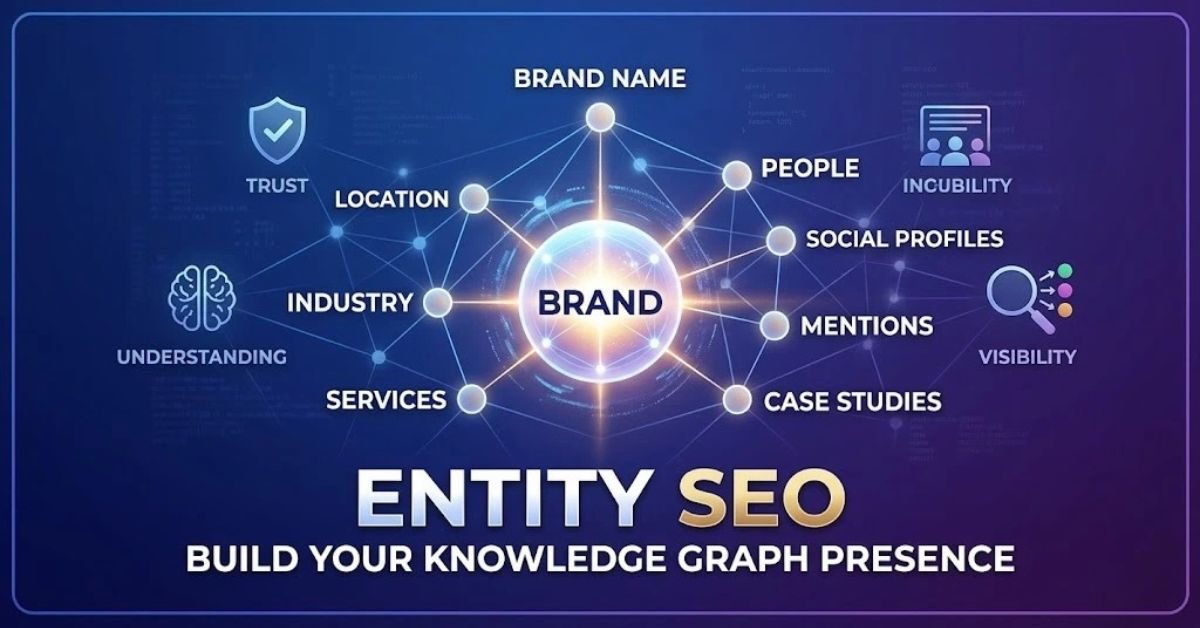
Search engines no longer think in keywords alone. Behind every search result, Google maintains a vast knowledge graph — a database of interconnected entities that includes people, places, businesses, products, concepts, and the relationships between them. When Google understands your brand as a distinct entity in its knowledge graph, everything changes: your rankings become more resilient, your brand appears in knowledge panels, your content gets cited by AI search engines, and your overall search visibility increases dramatically.
Yet most businesses have never heard of entity SEO, let alone implemented it. They continue to chase keywords and backlinks while ignoring the foundational entity signals that increasingly determine who Google trusts and recommends. In 2026, entity SEO is no longer a nice-to-have — it is a core pillar of effective search strategy.
If you want your brand to be recognised and trusted by both traditional search engines and AI-powered platforms, Webdo Solutions can help you build the entity foundation that modern search demands.
Need a professional SEO strategy tailored to your business?
Get a free SEO audit from Webdo Solutionsand find out where you stand today.
What Is Entity SEO?
Entity SEO is the practice of establishing and strengthening your brand’s presence as a recognised entity within Google’s Knowledge Graph and other knowledge bases. An entity is any uniquely identifiable thing — a person, business, product, concept, or place — that search engines can distinguish and associate with specific attributes and relationships. Entity SEO involves creating consistent signals across the web that help search engines understand who you are, what you do, and why your content should be trusted.
Why Entity SEO Matters in 2026
The shift from keyword-based search to entity-based search has been accelerating for years, and in 2026, entity signals are more influential than ever. Here is why entity SEO should be a priority for your business.
Google’s Knowledge Graph Drives Modern Search
Google’s Knowledge Graph contains billions of entities and trillions of relationships between them. When you search for a well-known company, person, or concept, the knowledge panel that appears on the right side of the results page is drawn directly from the Knowledge Graph. Being represented in this database gives your brand a level of visibility and credibility that traditional organic rankings alone cannot match.
AI Search Engines Rely on Entity Understanding
ChatGPT, Perplexity, Gemini, and other AI search tools depend on their ability to identify and understand entities. When these AI systems encounter your brand name in their training data or source material, they need to know what kind of entity you are, what services you provide, and whether you are trustworthy. Strong entity signals increase the likelihood that AI platforms cite and recommend your business — a key component of generative engine optimization.
Entity Authority Enhances Content Credibility
When Google recognises your brand as a legitimate entity, every piece of content you publish benefits from that entity’s authority. Your blog posts, service pages, and case studies are evaluated not just on their individual merit but also on the reputation and expertise of the entity that published them. This is the E-E-A-T framework in action — expertise, experience, authoritativeness, and trustworthiness are fundamentally entity-level signals.
Entities Create Competitive Moats
Keywords can be targeted by anyone. Backlinks can be built by anyone. But your brand entity is uniquely yours. Building a strong entity presence creates a competitive advantage that cannot be easily replicated by competitors. Once Google understands your brand as an authoritative entity in your industry, you enjoy a compounding advantage that grows over time.
Schema Markup and Structured Data Complement Entities
Entity SEO works hand-in-hand with schema markup and structured data. When you implement Organization, Person, and Product schema on your website, you are explicitly telling search engines about your entities and their attributes. This structured data reinforces the entity signals that Google gathers from other sources across the web, creating a comprehensive and consistent entity profile.
How to Build Your Brand’s Knowledge Graph Presence
Building a strong entity presence requires a multi-faceted approach that encompasses your website, third-party platforms, and the broader web ecosystem.
Step 1: Define Your Core Entities
Before you can optimise for entities, you need to clearly define the entities associated with your brand. For most businesses, these include:
Your business entity. Your company name, type of business, location, founding date, industry, and core services. This is the primary entity that should appear in Google’s Knowledge Graph.
Your founder or leadership entities. Key individuals associated with your business, including their roles, expertise, publications, and professional accomplishments. In many industries, the personal brand of the founder or CEO is closely linked to the company’s entity authority.
Your service entities. The specific services or products you offer, each with its own distinct identity, attributes, and relationships to your business entity.
Your client entities. Notable clients or case studies that you reference, which create relationship connections between your brand entity and other recognised entities.
Step 2: Establish Consistent NAP and Brand Information
NAP consistency — Name, Address, and Phone number — is the foundation of entity recognition. Every instance of your brand information across the web must be identical. Inconsistencies confuse search engines and weaken your entity signals.
Audit every platform where your business is listed: Google Business Profile, Bing Places, Apple Maps, Yelp, industry directories, social media profiles, and any other business listings. Ensure your business name is spelled exactly the same way everywhere, your address format is consistent, and your phone number is identical.
Beyond NAP, ensure that other business attributes — your industry classification, founding date, founder name, and service descriptions — are consistent across platforms. This consistency helps Google aggregate information about your entity with confidence.
Step 3: Claim and Optimise Your Google Business Profile
Your Google Business Profile is one of the most direct ways to communicate entity information to Google. A complete, optimised profile tells Google exactly who you are, where you are, what you do, and what your customers think of you.
Fill out every field in your Google Business Profile: business name, categories, description, services, hours, photos, and attributes. Regularly post updates and respond to reviews. A active, complete profile sends strong entity signals that reinforce your presence in Google’s Knowledge Graph.
Step 4: Implement Comprehensive Schema Markup
Schema markup is the most direct way to communicate entity information to search engines in a structured, machine-readable format. Implement the following schema types on your website.
Organization schema on your homepage and about page, including your business name, logo, founding date, founders, address, contact information, social media profiles, and sameAs links to all official profiles.
Person schema for key team members, including their names, roles, credentials, and affiliations. This is particularly important for the author entities that support your content’s E-E-A-T signals.
LocalBusiness schema if you serve specific geographic areas, including your service area, business type, and local contact details.
Service schema for each service you offer, linking each service entity to your parent Organization entity.
The sameAs property is particularly important for entity SEO. It tells search engines that your business entity exists on multiple platforms — your website, LinkedIn, Facebook, Twitter, Crunchbase, and industry directories — and that all these profiles represent the same entity.
Step 5: Build Your Wikipedia and Wikidata Presence
Wikipedia and Wikidata are two of the most influential sources for Google’s Knowledge Graph. If your brand or key personnel have verifiable notability, establishing a Wikipedia article and Wikidata entry can significantly accelerate your entity recognition.
Wikidata is generally more accessible than Wikipedia because it does not have the same notability requirements. You can create a Wikidata entry for your business with basic structured information — name, type, founding date, founder, website, and industry — which Google often uses to populate knowledge panels.
Wikipedia articles require verifiable notability, typically demonstrated through significant coverage in independent, reliable sources. If your business has been featured in major publications, received notable awards, or achieved measurable milestones, you may qualify for a Wikipedia article.
Even if you do not yet qualify for either platform, focus on building the third-party coverage that will eventually support a Wikipedia presence. Media mentions, industry awards, speaking engagements, and published research all contribute to the notability profile that Wikipedia editors look for.
Step 6: Earn Entity-Building Backlinks and Mentions
Not all backlinks are equal from an entity SEO perspective. The most valuable links for entity building come from sources that Google already recognises as authoritative and that are contextually relevant to your industry.
Focus on earning mentions and links from industry publications, professional associations, news outlets, and authoritative directories. These mentions help Google understand what your business does and where it fits within the broader industry landscape.
Unlinked brand mentions — instances where your business name is mentioned without a hyperlink — also contribute to entity recognition. Google’s algorithms can identify brand mentions in text and use them to build entity understanding, even without a traditional backlink.
Guest articles, expert commentary, podcast appearances, and conference presentations all create entity-building signals that strengthen your Knowledge Graph presence. Each appearance on an authoritative platform adds another data point that helps Google map your entity.
Step 7: Create Entity-Rich Content on Your Website
Your website content should consistently reinforce your entity signals. This means naturally incorporating your brand name, key personnel, services, and client relationships throughout your content — not as keyword stuffing, but as natural references that help search engines understand your entity network.
Include an author bio on every piece of content that identifies the author by name, title, and affiliation with your business. Link author bios to author pages that provide additional detail about the person’s expertise and credentials.
Reference specific clients, case studies, and results by name when relevant. These entity references create relationship connections in the Knowledge Graph and demonstrate real-world experience. Link to your portfolio and projects page so Google can confirm these client relationships.
Verified Search Console SEO Case Studies
Real performance data from Google Search Console for USA and UK businesses. No estimates, no projections.
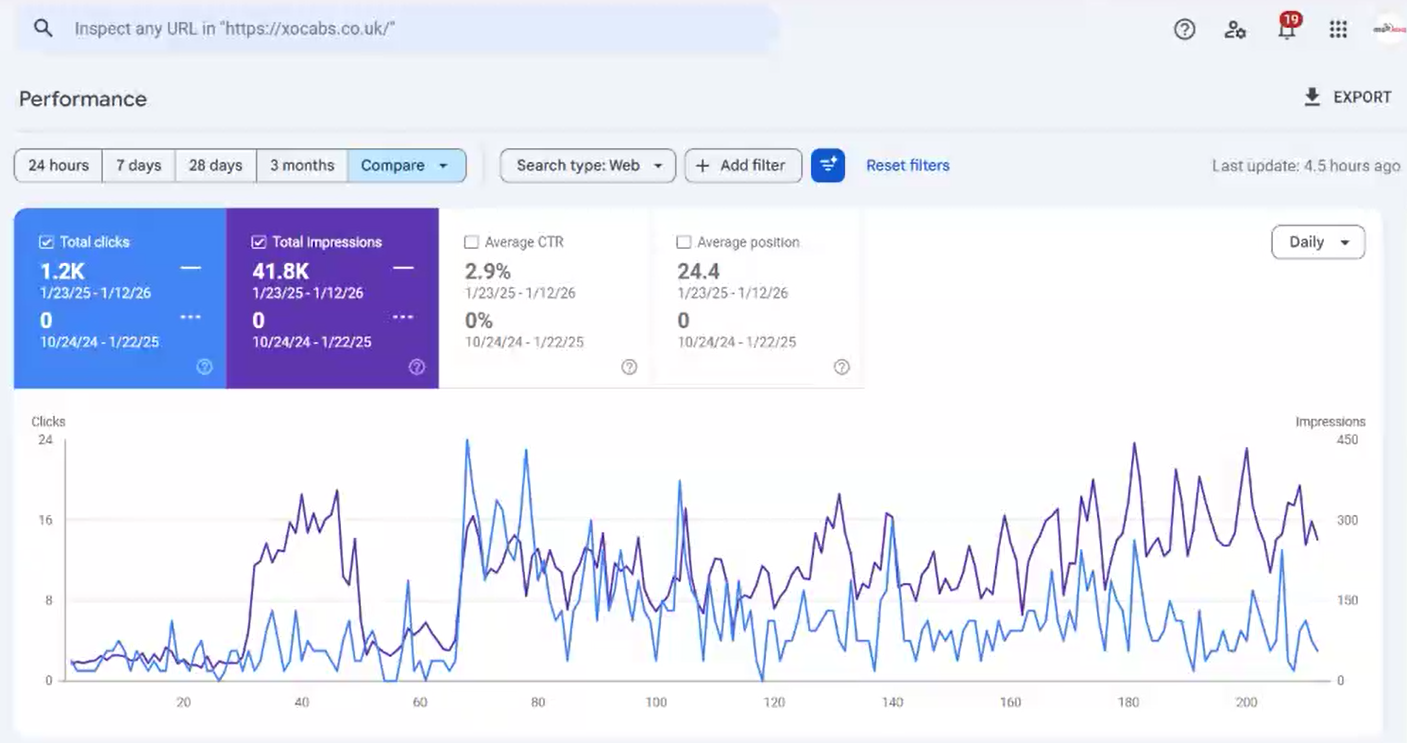
XO Cabs: Taxi & Local SEO
Letchworth Garden City taxi firm. Reached the top of the map pack with 65+ page-1 keywords and traffic up 340%.
View Case Study →
Dallas Parrots: Ecommerce SEO
Exotic bird store in Dallas. Impressions scaled from 219K to 4.73M and average position moved from 18.4 to 6.8.
View Case Study →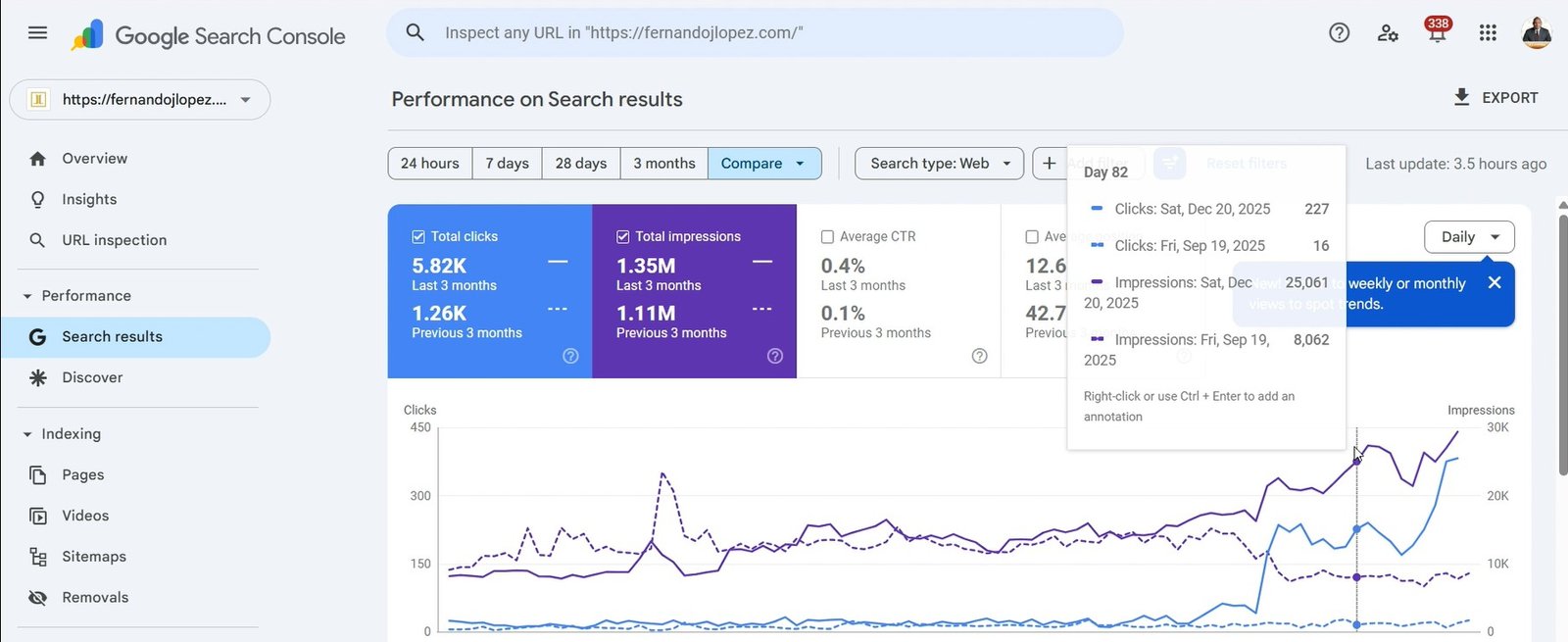
Lopez Law Group: Personal Injury SEO
Local topical cluster covering 25+ Texas cities and 20+ practice areas with ongoing entity SEO and AEO work.
View Case Study →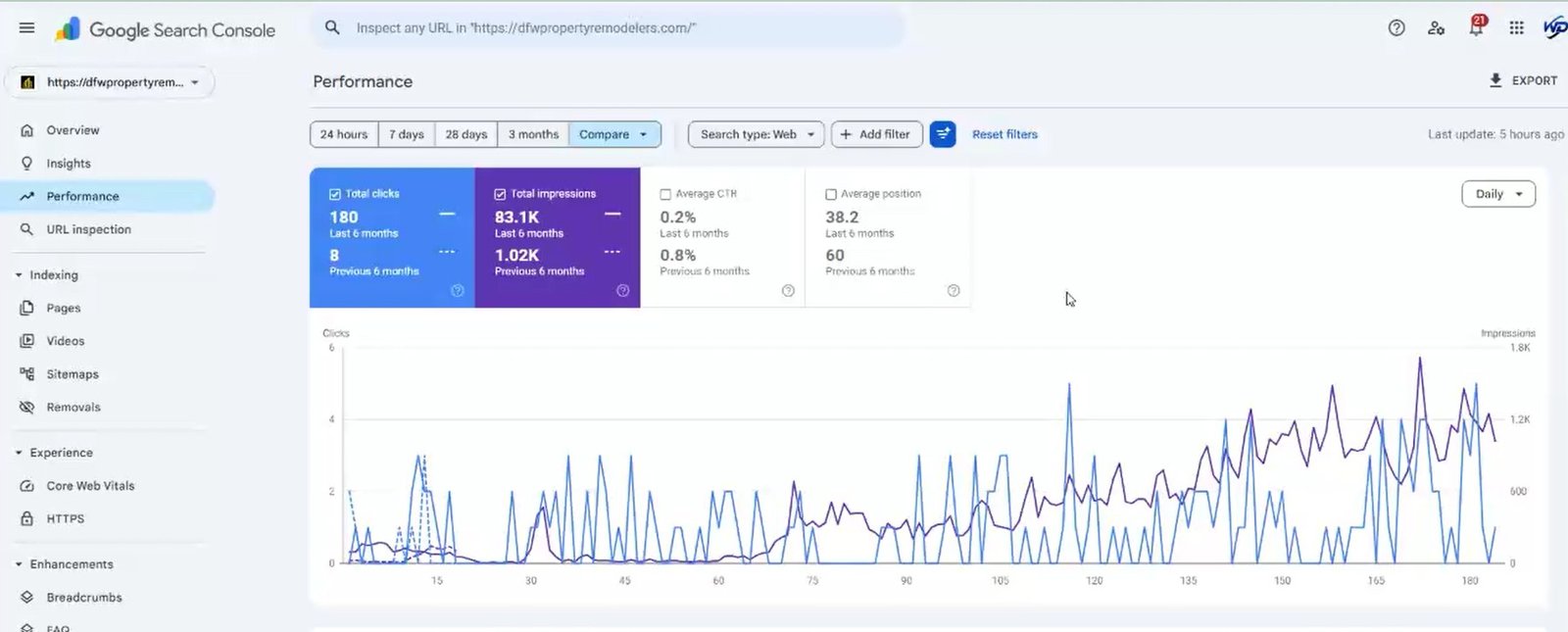
DFW Property Remodelers: Contractor SEO
Website redesign plus local SEO for a Dallas-Fort Worth remodeler, built on city-plus-service landing pages.
View Case Study →Use your primary service pages as anchor content that clearly defines each service entity and its relationship to your parent business entity.
Real-World Entity Building: Case Study Results
At Webdo Solutions, entity SEO is a core component of every SEO strategy we implement. Building strong entity signals has been instrumental in the results we deliver for clients.
Our work with Lopez Law Group illustrates how entity building amplifies search performance. By establishing the firm as a recognised entity in the legal SEO space — through consistent NAP data, comprehensive schema markup, authoritative content, and third-party mentions — we helped them achieve a 362 percent traffic increase and over 100 number-one rankings. The firm’s entity authority now compounds with every new piece of content they publish.
For XO Cabs UK, building their local business entity through taxi SEO — including Google Business Profile optimization, local directory citations, and consistent brand signals — helped them achieve the number-one position on Google Maps and a 340 percent traffic increase. Their strong entity presence in the local Knowledge Graph makes them the default recommendation for taxi services in their area.
Dallas Parrots’ growth from 219,000 to 4.73 million impressions through our ecommerce SEO services was accelerated by building product and brand entity signals that helped Google understand their market position and product categories. Strong entity recognition meant their content consistently appeared for category-level queries, not just individual product searches.
Common Entity SEO Mistakes
Inconsistent Brand Naming
Using “Webdo” on one platform, “Webdo Solutions Ltd” on another, and “Webdo Solutions LLC” on a third confuses search engines about which entity each profile represents. Choose one canonical brand name and use it consistently everywhere.
Neglecting Schema Markup
Without schema markup, you are relying entirely on Google’s ability to extract entity information from unstructured text. Schema markup provides explicit, machine-readable entity data that removes ambiguity and strengthens your entity profile.
Ignoring Third-Party Platforms
Entity SEO is not just about your website. Google builds entity profiles from information across the entire web. If your third-party listings are incomplete, inconsistent, or non-existent, your entity signals are weakened regardless of how well-optimised your website is.
Not Building Author Entities
Content without clear author attribution lacks the entity signals that support E-E-A-T. Every piece of content should be attributed to a named individual with verifiable credentials and a consistent online presence.
Treating Entity SEO as a One-Time Task
Entity building is an ongoing process, not a one-time project. Regularly audit your entity signals, update your schema markup, maintain your third-party profiles, and continue earning entity-building mentions and links.
FAQ
How do I know if my business is in Google’s Knowledge Graph?
Search for your business name on Google. If a knowledge panel appears on the right side of the results page with your business information, logo, and details, you are in the Knowledge Graph. If no knowledge panel appears, your business entity may not yet be recognised. You can also check for your business on Wikidata and Google’s Knowledge Graph Search API.
How long does it take to build a Knowledge Graph presence?
Building a Knowledge Graph presence typically takes three to twelve months of consistent effort. The timeline depends on your starting point, the consistency of your existing brand signals, and the authority of the platforms where your brand is mentioned. Businesses with extensive third-party coverage and consistent brand information generally achieve Knowledge Graph recognition faster.
Can small businesses appear in Google’s Knowledge Graph?
Yes. While global brands and public figures are the most prominent Knowledge Graph entities, local and small businesses can also be recognised — particularly through Google Business Profile optimization, consistent directory listings, and local media coverage. Local business entities are especially important for local search results and Google Maps visibility.
What is the difference between entity SEO and traditional SEO?
Traditional SEO focuses on keywords, backlinks, and page-level optimization. Entity SEO focuses on establishing your brand as a recognised, trusted entity with defined attributes and relationships. The two approaches are complementary — strong entity signals make your keyword-targeted content more authoritative, while keyword optimization drives the traffic that builds entity recognition.
Do I need a Wikipedia page for entity SEO?
A Wikipedia page is helpful but not required. Many businesses successfully build Knowledge Graph presence through Google Business Profile, Wikidata entries, consistent directory listings, schema markup, and authoritative third-party mentions. A Wikipedia page accelerates entity recognition but is not the only path to Knowledge Graph inclusion.
Conclusion
Entity SEO represents the future of search optimization. As Google’s algorithms become more sophisticated and AI search engines become more prevalent, the businesses with strong, recognised entity profiles will dominate search visibility across every platform.
Building your Knowledge Graph presence requires consistent effort across your website, third-party platforms, and the broader web ecosystem. The investment pays dividends across traditional search, AI-powered discovery, and brand authority — making entity SEO one of the highest-return strategies in modern digital marketing.
Ready to build your brand’s entity presence and dominate both traditional and AI-powered search? Contact Webdo Solutions for a free GEO audit. Our team combines entity SEO with comprehensive search optimization strategies to position your brand for long-term search dominance. Book your strategy call today.
About the Author
Ozair Sharif is the Founder of Webdo Solutions, a digital growth agency specialising in SEO, AEO, and GEO strategies. With years of experience helping businesses across the United States and United Kingdom achieve measurable search visibility, Ozair and his team have delivered results including 362 percent traffic increases, millions of new impressions, and hundreds of first-page rankings for clients across multiple industries.